

More Than a Month on the Calendar: What Blindness Awareness Month and White Cane Safety Day Mean for Families and Classrooms
If you’re the parent, guardian, or teacher of a child who is blind or has low vision, October can feel like a lot. Social media fills with ribbons and hashtags, and it’s fair to wonder what any of it means for your kid on an ordinary Tuesday. This post is for you. Blindness Awareness Month and White Cane Safety Day have deep roots in independence and equality, and the data shows why the adults around a child matter so much.
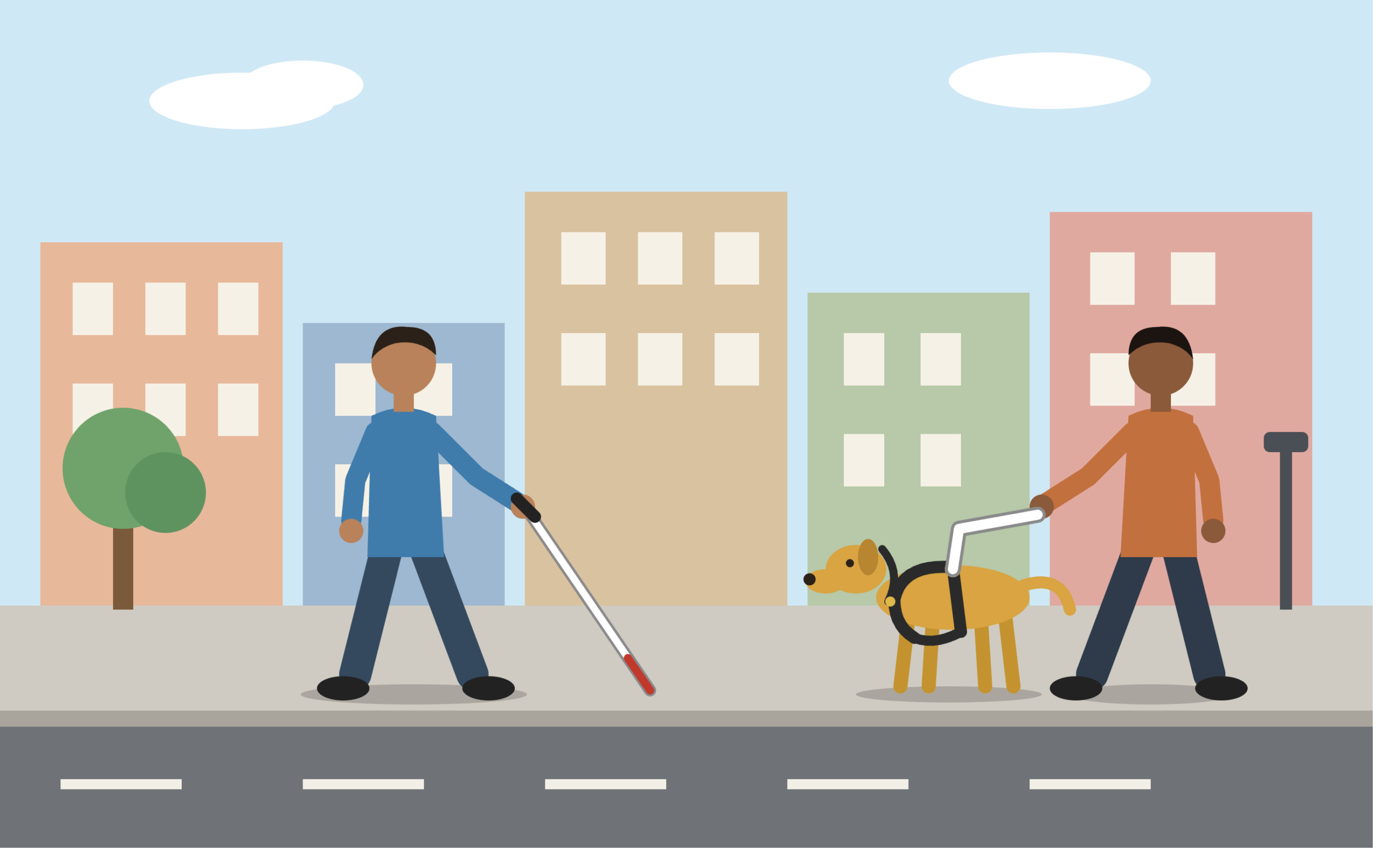
The White Cane: A Symbol of Independence
Many people think of the white cane as a safety device. Its history shows it’s about more than that. In July 1963, the National Federation of the Blind (NFB) asked governors to proclaim October 15 each year as White Cane Safety Day, and in October 1964 a joint resolution of Congress was signed into law. President Lyndon B. Johnson proclaimed the first observance within hours of the resolution’s passage. nfbacb
The NFB’s model White Cane Law, which includes the October 15 designation, became known as the Civil Rights Bill for the Blind, the Disabled, and the Otherwise Physically Handicapped. A version of that law is now on the books in every state. The day started as a civil rights effort. nfbnfb
The name has evolved too. In 2011, President Barack Obama proclaimed October 15 Blind Americans Equality Day. One local government calendar notes that the emphasis has shifted over time from safety toward independence and equality. For a family, that shift is the point. The goal isn’t to shield a child from the world. It’s to give them the tools and confidence to move through it on their own terms. abc10snohomishcountywa
Blindness Awareness Month: Why It Exists
Blindness Awareness Month was launched in October 2009 by The Little Rock Foundation in Voorhees, New Jersey, an organization serving families with blind or visually impaired children. That origin matters here, because the month began with families like yours. Today it aims to educate the public and to push for better access to eye care, assistive technology, and inclusive design. nelowvisionawarenessdays
What the Numbers Say About Students
Here is a snapshot of blind and visually impaired students in the U.S.
There are tens of thousands of them. The American Printing House for the Blind (APH) runs an annual federal census under a law that dates to 1879, the Act to Promote the Education of the Blind, which provides adapted educational materials to eligible students. As of January 2023, that census counted 55,382 registered students across the U.S. and its outlying areas. aphaph
Most are in public schools. APH’s report shows 43,937 of those students, roughly 79%, were in public schools. That means general education teachers, not only specialists, are often the adults in the room. aph
Every child learns differently. According to the same APH report, about 35% of registered students primarily read print (visual readers), about 8% primarily read braille, about 12% rely on auditory materials, and about 21% are pre-readers. One important caveat comes from APH itself, which cautions that the number of students who read braille in the U.S. cannot be determined from this data. These are registration categories, not a measure of literacy. Still, the spread shows there is no single “blind student.” Some children need print adaptations, some braille, some audio, and some a mix. aphaph
The adult picture shapes our expectations. A well-known survey by Bell and Mino, published by the NFB, found that 37% of legally blind or visually impaired adults were employed. A later update confirmed that 37% figure. Employment numbers vary by source and method, so I wouldn’t lean on any single statistic. I’ll offer one interpretation of my own, which is not a cited fact: this is a big reason expectations, early skills, and the right supports matter from the start. nfbnfb
What This Means for Families and Teachers
The data and history point to a few ideas, which I’m presenting as commentary:
- Independence is a skill that’s taught. The cane, braille, assistive technology, and everyday living skills all take instruction and practice.
- One size fits no one. With reading and learning needs this varied, a plan that works for one child may not work for the next.
- Adults are the bridge. Parents, guardians, and teachers translate a child’s needs into daily routines, classroom accommodations, and high expectations.
- Awareness should lead somewhere. As one low-vision resource says, the community needs to be remembered throughout the year, not just during this important month. nelowvision
Let’s Talk
If you’re a parent, guardian, family member, or teacher supporting a child who is blind or has low vision, you don’t have to figure it all out alone. Use our contact form to set up a discovery call. We’ll talk about your child’s or student’s needs and how our services can help.
Sources
- National Federation of the Blind, Future Reflections (1983), “White Cane Safety Day: A Symbol of Independence,” by Marc Maurer: nfb.org
- American Council of the Blind, “Reflection on the History of White Cane Safety Day”: acb.org
- ABC10 Sacramento, “The History of White Cane Safety Day”; Snohomish County, WA, White Cane Day calendar listing
- American Printing House for the Blind, FY2024 Annual Report and 2023 U.S. Census Map; APH Federal Quota distribution notices: aph.org
- Bell & Mino, Journal of Blindness Innovation and Research (2013; updated report 2018): nfb.org
- Awareness Days calendar and Northeast Low Vision (Blindness Awareness Month origin and goals)

